Market Update · Northeast Florida
This week we close on a short sale at 11623 Double Eagle Court — the end of a long, hands-on journey, and the perfect moment to talk honestly about where the short sale and foreclosure market is headed, and why it isn't the bad news the headlines make it out to be.
When you hear "short sale" or "foreclosure," it's easy to feel a knot in your stomach. But here's the truth I've come to believe after walking one all the way to the closing table: this isn't a sign the sky is falling. It's a sign the market is doing what markets always do — adjusting. And in that adjustment are real opportunities, and real second chances for families who feel stuck.
The Double Eagle Court Journey
A short sale is not a normal sale, and I'll be honest — until you've done one, you don't fully understand it. This one taught me the process inside and out: the lender approvals, the documentation, the deadlines, the back-and-forth. It also taught me what it really takes to get a short sale to the finish line: persistence, attention to every detail, and being responsive the moment something is needed. A missed email or a slow document can stall the whole file for weeks.
More than the paperwork, though, it taught me about people. Behind every short sale is a family who didn't plan to be here — and who deserves to be treated with dignity, not judgment. Getting them to closing is one of the most meaningful things I've done in this business.
It's nothing to be ashamed of
Things happen. The market shifts, a job changes, life takes an unexpected turn, and sometimes you're left in a situation you never saw coming. That is not a moral failing — it's life. The key is simple: address it early, while you still have options, before it becomes a foreclosure and the legal process that comes with it.
Short Sale vs. Foreclosure: Why It Matters
If you're falling behind, the difference between these two paths is enormous — for your credit, your record, and your future. A foreclosure is something that happens to you. A short sale is something you do on your own terms, with an agent guiding you.
| Short Sale | Foreclosure | |
|---|---|---|
| Who's in control | You — you sell with an agent | The lender takes the home back |
| The process | A guided home sale | A public court case (Florida is a judicial-foreclosure state) |
| Credit impact | Negative, but generally less severe | More severe and longer-lasting |
| Buying again | Often a shorter waiting period | Typically a longer waiting period |
| Dignity & privacy | A private, managed transaction | A public legal record |
On credit and buying again: under commonly applied mortgage guidelines, the waiting period to qualify for a new home loan is often around seven years after a foreclosure versus roughly four years (or less) after a short sale, depending on the loan program and your circumstances. Waiting periods change, so confirm the current rules with a licensed lender — but the direction is consistent: a short sale generally lets a family recover and become homeowners again sooner.
If You Bought Between 2022 and 2024
If you purchased near the top of the market, you may find yourself temporarily upside down — owing more than the home would sell for today. That feels scary, but it's important to keep perspective: markets go up and down all the time. Being underwater on paper is not the same as being in trouble, and for many owners, simply staying put and letting values recover is the right move.
What matters is not panicking, but planning. Sit down and evaluate your long-term goals, then choose the option that truly fits your family:
- Stay and wait. If you can keep making payments, time and appreciation are often on your side.
- Talk to your lender early. A loan modification, forbearance, or repayment plan may bridge a rough patch.
- Rent it out. If you need to relocate, the right rental math can let you hold the home until values rise.
- Short sale. If you need to move on and you're underwater, this is the path that best protects your future.
Where the Market Actually Stands
Let's stay with the facts. Here in Northeast Florida, foreclosure filings did fall to historic lows during the pandemic years and have since climbed back. According to Florida court-filing data (Florida Court Clerks & Comptrollers / Office of the State Courts Administrator), here's the local picture — from the 2021 low to 2025:
| County | 2021 (pandemic low) | 2025 filings | Per 1,000 owners |
|---|---|---|---|
| Duval | 429 | 2,225 | 8.7 |
| Clay | 106 | 469 | 7.1 |
| St. Johns | 70 | 431 | 3.9 |
| Nassau | 37 | 146 | 4.1 |
All four counties rose again in 2025 — but it's worth noting this is largely a normalization back toward pre-pandemic levels, not a runaway crisis. Duval's 2,225 filings sit just above its 2019 total; Clay's 2025 figure is almost identical to 2019. The national picture echoes this:
The Federal Reserve Bank of New York notes that while delinquencies are ticking up — concentrated in areas with rising unemployment and softer home prices — they're still near historically low levels, and strong homeowner equity continues to keep broad foreclosure pressure in check. In plain terms: this is a market rebalancing, not 2008.
What this means — for both sides of the deal
For struggling owners, rising filings are a reminder to act early; help and options are widest before the courts get involved. For buyers, a normalizing market means more inventory and more opportunity than the frenzied years of 2021–2022. The market is making room again.
Who Is a Good Candidate for a Short Sale?
A short sale isn't for everyone, but it's the right answer more often than people realize. From what I've learned, the best candidates usually share a few things:
- They owe more than the home is currently worth (underwater), and
- They have a genuine hardship — job loss, income drop, divorce, medical event, or relocation.
- They can't sustain the payments long-term, so waiting it out isn't realistic.
- They're willing to stay responsive and provide documents promptly — cooperation moves the file.
- Above all, they reach out early, before a foreclosure case is well underway.
If you're struggling, you don't have to navigate this alone — and you don't have to wait until it's a crisis. A free, neutral place to start is a HUD-approved housing counselor, alongside a conversation with your lender and an agent who has actually walked this road.
Quick Questions, AnsweredWhat's the difference between a short sale and a foreclosure?
Does a short sale hurt my credit less than a foreclosure?
I bought in 2022–2024 and may be underwater. What now?
Is a short sale something to be ashamed of?
How early should I reach out if I'm struggling?
Feeling the Squeeze? Let's Talk — No Judgment.
If you're underwater, behind, or just unsure of your options, the worst thing to do is wait. A confidential, no-pressure conversation early can change everything. Start by understanding where you stand — what your home is worth today, with no strings attached.
Get My Home ValueConfidential. Compassionate. Always in your corner.
Whatever season you're in, there's a path forward — and you don't have to walk it alone. Let's get you home.
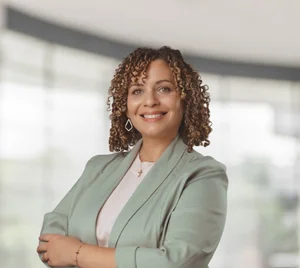
Rosalyna Avila
Broker · Living Truth Homes Realty · Jacksonville, FL
Helping You Steward Your Next Chapter.
Educational only — not legal, tax, credit, or financial advice. Short sale, foreclosure, and credit outcomes depend on your lender, loan program, and individual circumstances; consult a licensed attorney, lender, or HUD-approved housing counselor. Figures current as of 2026 and subject to change. Sources: Florida Court Clerks & Comptrollers / Office of the State Courts Administrator and U.S. Census Bureau (local filings); ATTOM (May 2026 U.S. foreclosure report); Federal Reserve Bank of New York, Liberty Street Economics (mortgage delinquencies).